Driving my Toyota
Listening to my Motown playlist
on my way to eat Mexican food
Before watching women’s soccer with friends.
That’s my 4th of July.
Driving my Toyota
Listening to my Motown playlist
on my way to eat Mexican food
Before watching women’s soccer with friends.
That’s my 4th of July.

Steve Connors was a good man. A regular guy meaning he played football in high school, made B’s and C’s at the state University, graduated, rabble-roused a little bit in his youth, got a job, married a good woman he had known a long time, had two kids, only cussed with his buddies or when alone, was a good son, was a good son-in-law, and paid his taxes.
He knew something was really wrong when he woke up. Everything was white. White sheets, white walls, white…
“What is that?” He wondered.
“White mist? Am I on a friggin’ cloud?”
Steve bolted up. He was wearing white cotton pajamas. I never wear white cotton pajamas. He looked around. There was no furniture, no windows, no doors.
“Am I in an insane asylum?”
He was feeling sweaty, agitated, confused, and a bit scared though he was good at keeping that last emotion in check.
He looked at the floor. White mist.
“I’m in a cloud.” He decided not to step down.
“I’m dead.”
He pinched his skin.
“Nope.”
He yelled, “Hello?!”
Silence. Absolute silence. Then…
“Hello, Steve.”
“Holy shit!” Steve jerked. “Where’d you come from?”
“Just right there,” She said pointing nowhere. She looked older than Steve but younger than his mother.
“Where the fuck am I… sorry about my bad language.”
“You’re in between.”
“In between what?”
“Life and death.”
Steve felt numb. He didn’t move at all for several minutes.
“It’s confusing I know. But you and I have to talk about some important things right now, Steve.”
“Is this one of those near-death experiences I hear about? People going to the light and then come back into the body?”
She smiled.
“Something like that.”
Steve shifted around in the bed.
“This is fucked up shit. Am I drunk?”
“No.”
“Then where am I? What is this place? Are we on a cloud?”
She smiled again.
“It’s like a cloud. You are between living on Earth and leaving, dying, from Earth. You and I need to talk about some very important things. She paused. “ And then you have to decide what you’re going to do.”
“Decide what?”
“Decide what you’re willing to do if you return to Earth.”
“If!”
“Yes, Steve. You made a deal with me before you were born on Earth and you’ve not lived up to your part. Yet.”
“Lady, I’ve never seen you before.”
“You have. You just don’t remember.”
“Am I in a hospital dying from cancer or a car accident?”
“No. You were one of nineteen people shot at your daughter’s school picnic. A gunman with an AR-15 assault weapon walked onto the grounds and fired multiple rounds into the children, also hitting some parents.
“Fifteen children are dead. Four of you are being rushed to the hospital. Two will die on the way. Two of you are having conversations with your Guides right now.”
Steve had his hands on either side of his head trying to hold in his racing thoughts.
“Fifteen children are dead?”
“Yes.”
“Two more people will die?”
“They just have actually.”
“Who?”
“I’m sorry to tell you that your daughter, Annabella, was one of them.”
Steve screamed and started to get out bed, but looked down at the mist then fell back on the bed.
“She was one of the ones who just died?”
“Yes, Steve. She didn’t suffer though.”
Steve was sobbing. Shoulders slumped. Defeated.
“My precious baby girl.”
Steve rolled onto his stomach and buried his head in the pillows, crying.
He woke with a start.
“Shit. Am I in the same place?”
He flipped around. She was still there.
“How long was I asleep?”
“A while.”
“What is happening to me on Earth?”
“You’re just now entering the emergency room.”
“What? It’s been forever.”
“Time and space are different here, Steve.”
Steve closed his eyes. Rubbed them. Shook his head.
“OK. What is it I’m supposed to learn? What deal did we make? And why did Annie have to die!” He was screaming again.
“Annie died because she fulfilled her purpose on Earth.”
“She was only eight. What purpose could have been done by then?”
“The deal she made before being born was that she was willing to die the way she did.”
“She knew she would be killed?”
“She knew while she was here, but she didn’t know it on Earth. Steve, because she fulfilled her agreement she did not suffer at all when she died.”
“Why would she agree to die like that?”
“So you would have the chance to course correct your life.”
Steve could only look at her.
She stood silently. Her face was gentle.
“Okay okay. So what have I done wrong?”
“It isn’t a case of doing something wrong per se. It’s a case of do you want to fulfill your real purpose on Earth instead of just living a good, decent life.”
“A good life isn’t good enough I guess. I don’t know what you mean by me living my real purpose. I’m a decent man.”
“Yes you are. She waited. “And you agreed that you would be more.”
“Can you just tell me what I need to do? I’m getting really tired of this conversation.”
She smiled again. “Why do you think it was a gunman with a powerful, military-type assault rifle that killed your daughter, and now, sixteen other people, and has you and another person pending?”
“I don’t know. I don’t know. I’ve always been responsible with guns. Granddaddy taught me to respect guns. I’ve always had to clean my rifle before we went hunting. We always eat what we kill. I have never been sport hunting. I don’t believe there is such a thing as ‘sport’ in hunting.”
“Exactly.”
“Exactly. Exactly what?”
“You have always been very respectful of guns. You have always been very careful. Why then do you let others talk and behave irresponsibly about guns?”
“I can’t stop people from buying what they are legally allowed to buy. Shit. Is this about gun control?”
She smiled.
“You’re fucking kidding me!”
“Steve, I think it’s a little bit more since you’re here. You made a deal with me before you were born on earth that you were going to be the voice of reason about guns. You agreed You would be willing to stand up to your friends and the NRA so that things did not get out of hand about guns the way they have.
“You’ve done nothing about it for years.
Steve, people like you. People respect you. People follow you. You have never been out of control with guns. You have never been unreasonable with the type of guns and ammunition you purchase.
“The deal was that you would use your credibility as “one of the guys”, a hunter, to be a leader in your country to bring sanity to the type of weapons and ammunition that are available, and more importantly, how people gain access to guns.
“Annabel agreed to be your daughter knowing she would be gunned down if you didn’t step up to your higher purpose.
“You have a choice now. Her death can mean nothing, or you can step up and live your higher purpose on Earth.
“You mean I live?”
She smiled.
Steve closed his eyes and cried again.
When Steve Connors opened his eyes, he saw his wife sitting beside him. Her eyes were red and swollen from crying. She sobbed when she saw that Steve was now waking up after his surgery.
“It’s a miracle, thank you God, it’s a miracle,” was all she could say when she collapsed into Steve’s arms.
“Honey, it’s okay. I’m okay.”
“Annie…” his wife started to say.
“Honey, Annie is okay. I know she’s gone from us here, but I’ve been to heaven. I know Annie didn’t die with pain.
“And she won’t die in vain either honey.
“Babe, there’s no guns in heaven and we’re going to bring just a little bit of that heaven down here on earth.”
Author’s Note: This story was written years ago, long before the current mass shootings in Uvalde, Texas and Buffalo, New York.


I didn’t know about the 2017 solar eclipse until my friend, Rob, told me about it in the fall of 2016. It was almost a throw away comment he made during lunch with our spouses, but I pounced on it.
That night I found the path the eclipse will journey across America on August 21 and started my search for cheap hotels . I found none. In desolate areas, the hotel equivalent of a “Motel Six” were already $3,000 per night. Repeat that: “$3,000 per night.” The eclipse was still ten months away and rates were already reflecting the # 1 American value: money. Ugh.
Camping was not an option for me because I have none of the equipment and really don’t know what I’m doing. So, throughout the fall, I’d hunt and peck on the internet now and then, trying to find some place to stay on the path.
Not unlike Rob’s casual mentioning of this event to me, I casually mentioned it to my adventurous friend, Vicki, who immediately said, “We have to do this somehow.” It was December 2016, eight months to eclipse day, and rates were exceeding $6,000 per day.
So we decided we were going to drive from where she lived— about five hours to the center of one of the “best viewing sites” according to the NASA map. We will just drive there, see the eclipse, and drive back.
This was the plan back in December.
Wondering if this is going to be like Thelma and Louise, minus the bad stuff?
More to come…
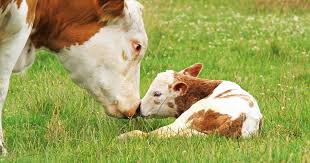
Here’s something you can easily do today to make the world a better place… skip meat today.
There is a trend called “Meatless Mondays,” but that implies you have to do “without something.” I’d like to turn that around and make it proactive…just skip eating meat today, and every Monday. No big deal to you. In fact there are many benefits.
Here are just a few of those benefits from the folks at “Meatless Monday:”
Why Meatless?
Because going meatless once a week may reduce your risk of chronic preventable conditions like cancer, cardiovascular disease, diabetes, and obesity. And going meatless once a week can also help reduce our carbon footprint and save precious resources like fossil fuels and fresh water.
For Your Health:
Reduce Heart Disease and Stroke—Vegetables, fruit, and whole grains have been shown to protect against cardiovascular disease. One study found that each daily serving of fruits or vegetables was associated with a 4% decline in coronary heart disease, and a 5% lower risk of stroke.[1] Another study found that a diet of 2.5 or more servings of whole grain per day was associated with a 21% lower risk of cardiovascular disease (heart disease, stroke, fatal cardiovascular disease).[2]
Limit Cancer Risk—There is convincing evidence that red meat and processed meat consumption increases the risk of colorectal cancer. There is also limited but suggestive evidence that red meat increases the risk of esophagus, lung, pancreas, and endometrium cancer and that processed meat consumption increases the risk of esophagus, lung, stomach, and prostate cancer. In contrast, a diet rich in fruit and vegetables decreases the risk of several types of cancers, including mouth, pharynx, larynx, esophagus, and stomach, evidence suggests.[3]
Fight Diabetes—Research suggests that plant-based diets, particularly those low in processed meat, can reduce your risk of type 2 diabetes.[4] Eating a plant-based diet can decrease total calorie consumption which helps you obtain and maintain a healthy weight, a key component to preventing and treating diabetes.[5]
Curb Obesity—Several large studies in Europe and the United States have demonstrated that people on plant-based, vegetarian diets tend to have a significantly lower body weight and body mass index (BMI). This may be in part because plant-based diets are rich in fiber (which is not found in animal products). Fiber contributes to fullness, resulting in lower calorie intake and less overeating.[6],[7],[8],[9]
Live Longer—Evidence suggests that eating a diet rich in fruits and vegetables, and a limited amount of red meat can increase longevity, whereas red and processed meat consumption is associated with increases in deaths due to cancer and cardiovascular disease.[10]
Improve The Nutritional Quality of Your Diet—Going meatless encourages consumption of plant-based sources of protein, like beans and peas. Consuming beans and peas results in a higher intake of fiber, protein, folate, zinc, iron, and magnesium. Also, diets high in beans and peas are associated with lower intakes of saturated fat and total fat.[11]
For Your Wallet:
Curb Healthcare Spending—Each year in the United States, chronic diseases like heart disease, stroke, cancer, and diabetes cause 7 in 10 deaths, and account for 75% of the $2 trillion spent on medical care.[12] In 2008, the estimated health care costs related to obesity were $147 billion.[13] By reducing our risk for these conditions, we can curtail healthcare spending nationwide.
Cut Weekly Budget—Many people save money by adding meatless meals to their weekly menus. Meatless meals are built around vegetables, beans and grains—instead of meat, which tends to be more expensive.[14] This is partly because producing meat requires extra expenses like feed and transportation. Though it can be challenging to serve healthy meals on a budget, going meatless once a week can help conserve money for more fruits and vegetables.
For the Environment:
Minimize Water Usage—The water needs of livestock are much greater than those of vegetables and grains.
– Approximately 1,850 gallons of water are needed to produce a single pound of beef.
– Approximately 39 gallons of water are needed to produce a pound of vegetables.[15]
Americans consume nearly four times the amount of animal protein than the global average.[16] When compared with current food intake in the US, a vegetarian diet could reduce water consumption by up to 58% per person.[17]
Reduce Greenhouse Gases —Studies show that meat production produces significantly more greenhouse gases than vegetables, including carbon dioxide, Methane and Nitrous Oxide – the three main contributing sources of greenhouse gas. Beef was found to produce a total of 30 kg of greenhouse gas (GHG) per kg of food, while carrots, potatoes and rice produce .42, .45 and 1.3 kg GHG per kg of food, respectively.[18]
Reduce Fuel Dependence—About 25 kilocalories of fossil fuel energy is used to produce 1 kilocalorie of all meat based protein, as compared with 2.2 kilocalories of fossil fuel input per 1 kilocalorie of grain based protein produced.[19] The meat industry uses so much energy to produce grain for livestock that if instead we used the grain to feed people following a vegetarian diet, it would be enough to feed about 840 million people.[20]

“Ever Onward to Victory”
Our final two days were back in Habana.
Impressions:
Yes, Cuba is poor in materials and even natural resources.
Tourism seems to be its most stable and successful business.
Outside Habana, the country is a beautiful island with hills, mountains, rivers, waterfalls, biospheres, chickens roaming everywhere and roosters waking you at 4:45 AM.
People outside walking, walking, walking, hitching a ride when they can, rarely a private car in sight.
Food extremely limited in variety but served with pride in generous portions.
Music.
Dance.
Heat. Humidity.
Kindness. Smiles.
Feeling, not like a tourist. No begging. No hassles.
Cubans love their country and see its flaws. They want a better standard of living but don’t want to be “too commercial like America.”
Cubans we met love Americans and think our two governments are “silly and we need to be friends.”
Cubans love Fidel and know he’s “holding on too much to the revolution.”
Cubans love Raoul and “believe will take us forward.”
They are proud of their schools and medicine.
Stay in a Casa Particulares with Cuban families. The hospitality is enriching to the soul.
Eat in a palador, not restaurants for the same reason.
Swim in the sea.
Hike in the hills.
Walk the tobacco farms.
Learn the revolucion, Bay of Pigs, and the embargo from their perspective.
Buy books written from their perspective.
Leave behind as much as you can: lotions, sunscreens, toilet paper, mosquito repellant, clothes, tips… the staff at the casas appreciate it greatly.
Listen as much as you can.
Ask questions.
Learn as much Spanish as you can and speak it.
Leave behind your kindness and compassion.
Take with you a better understanding that people are people.
We really want the same things.

Cuba may be poor and lack so many resources, but it is a beautiful island.
We spend an hour in the morning walking through the national park ” El Cubano” in the mountains of Escambay, just a thirty minute drive outside Trinidad. The area is lush with a diversity of plants, birds and animals. We had a guide who first attempted to narrate us through the biodiversity of the area, but we were rebelling that morning and were focused on reaching the end of the trail where a waterfall awaited.
Of course it was hot. Of course it was humid. It’s a tropical island.
The walk was up and down easy hills and we were all drenched in sweat when we reached our destination. The waterfall cascaded into a clear pool of cold water. Most of our group stripped to our swim suits and jumped in.
Our pace one tour was slowing down. We only had another day together and by now, clusters of friends had formed: the under 40 New Yorkers; the two families bonded withe 50-something couple from New York; the 60-something couple from Oregon protecting the married mom traveling alone;the two single men from California each kept to themselves, but not awkwardly so. The group worked well together during our nearly two weeks together.
We asked question of our guide and office other about Cuban politics and life; American politics; each others jobs… not surprisingly a high percentage of the group worked in non-profits or higher education. We were balanced by our New Yorkers working in advertising, law and “investments.”
Dinner was at Playa Ancon.
Our bus stopped at what seemed to be someone’s house. It was our caterer and our musicians for our evening on the beach. The beach was almost vacant and what few people were there left soon after our arrival because a storm was blowing our way. We thought for sure were we about to be hit with a tropical storm, but, Dady, our lead guide said, “Let’s see…”
Everyone left the beach except us.
We were rewarded for our faith.
The few raindrops didn’t even dampen our clothes.
The sunset performed for us along with our musicians. Fresh fish, veggies and rum…an abundance of rum along with a few Cuban cigars.
Celebration in the joy of Cuba’s beauty.

Trinidad, Cuba.
The first time I’d ever heard of Santeria and seen the Casa Templo de Santeria: Yemaya was on the Departures TV series when Canadian travelers, Scott Wilson and Justin Lukach, walked into what appeared to be a regular storefront business on the cobbled streets of Trinidad.
What they found was a black “doll” dressed in all white sitting on a chair in the middle of an empty room. She represents the sea goddess, Yemaya.
It’s startling not just because of what it is, but the room has an energy and calmness at the same time. A very palatable feeling.
The high ceiling, white walls and blue fish and water paintings created a calm and cooler atmosphere contrasting heavily with the heat, humidity and ruggedly cobblestone streets of this UNESCO cited Spanish Colonial city located in the southern, center part of Cuba.
Our group had an appointment with the Temple Priest to learn about this religion that mixes traditions and beliefs brought by West African slaves and over years, mixed with Spanish Colonial Catholicism.
More than 70% of Cubans practice this religion. Many come to the Priest for advice about work, love, decisions to be made… the advice is typically a mix of prayer and rituals centered around plants, fruits, vegetables and animals.
The Temple is closed on Sunday because the Priests attend mass in the Catholic Church.
This is when I wish I had started my Spanish lessons earlier so that I could return and converse with the Priest. Through our translator I learned the Priests only wear white and the people I had seen in the streets in all white were either devotees of the religion or studying to become Priests. Unfortunately, my infant-level Spanish prevented me from further engagement.
Dady, our lead guide had given us all street maps of Trinidad because “the streets all have two names and are confusing because they follow no pattern.”
Boy, was she right.
You learn early that the center of this small community is at the higher elevation and our casa was “down the slope.” Streets and cobbled and challenging to walk. My husband and I were lost on our afternoon walk and about to head in the completely wrong direction when our son spotted us and put us on the right course.
Hot. Humid. A much poorer community than Cienfuegos the day before.
The peak tourist season had ended which I liked, but it made for empty streets and empty bars.
Our casa was “under construction” and more “rustic” than others. The family, however, was as warm and kind as we had learned to expect. We had lunch there and were served our first treat of Cuban helado. My husband had both chocolate and vanilla.
He and our son met up with others in the group that evening to find a hotel to watch the NBA playoffs.
I stayed in the room to write and read my book on Che I’d found in the town earlier that day.


Fidel
Che
Raoul
Camilo
…wait, Who?
Camilo Cienfuegos.
Oh, the image etched in steel alongside a massive building at the Plaza de la Revolution. We thought it looked like Juan Valdez, the coffee guy.
Camilo. Son of a tailor, born in Habana.
Too poor to continue college so he goes to America to find work. His visa expires and he’s sent back to Cuba.
His life changes when Batista’s troops shoot him and others who were honoring the memory of a socialist hero.
He was with Fidel when the Granma landed in Cuba, 2 decembro, 1956 to start the revolution.
A commandant like Che.
The “Hero of Yaquajay.”
He and Che lead the rebels in the final battle against Batista’s reign. Not a shot was fired as the two Comandante’s forces united and surrounded the troops of the President that the not even the US wanted when he fled Cuba the next day.
Commandante Camilo served as head of Armed Forces the first year of Castro’s Government.
Then, one night, his plane mysteriously disappeared, never to be found. He was 27 years old.
Camilo was once asked by Fidel during a speech, “How I’m doing?”
Camilo answered, “Vas bien, Fidel.”
The crowd took up the chant, “Vas bien, Fidel” and the quote is inscribed on the steel outline of his image in the Plaza. “Vas bien, Fidel” An image that was only placed there fifty years after his death. Che’s image had been immortalized there almost immediately after his death.
Even Cubans believe there was mystery behind Camilo’s death. The commandante did not support violence and death against enemies of the state. He was a socialist, perhaps a communist, but was quoted saying he would not treat prisoners the way Batista treated his enemies.
More egregious, however, was he was divorcing his wife to marry a wealthy woman and had always had a “joie de vive” that did not match the seriousness of a revolucion.
Some believe Fidel consolidated his power by sending Che to other countries to promote revolucion and eliminating Camilo undercover of the night.Who really knows? Raoul?
Che died a martyr, every revolution needs one.
Camilo has slowly been recognized on currency, schools, cities, museums…
What will they do when Fidel’s time has come?


The bus trip from Vinales, southwest of Habana, to Cienfuegos, near the center of the island on the southern shore, was going to take at least six hours of drive time. Fortunately, we had several stops and the day was of conversation about Cuban history (since Castro’s Revolution) and culture.
The highway was desolate. Miles pass without seeing any other motorized vehicle.
In the morning we watched a documentary on the bus about Fidel that was made by Americans. It featured many American notables such as former US Attorney General, Ramsey Clark, giving what seemed to be a balanced view of what the Revolucion was about. In a way, Fidel’s Revolucion felt like an early version of the “anti 1%” activity that occurred briefly in the States in 2014/15 and then was squelched. (Yes, Cubans call their President Fidel, not President Castro)
No question that former Cuban President Batista was a bad boy. It was said during his reign that the U.S. ambassador to Cuba had more power than Batista. Worse, however, was the mafia control of gambling, wealth and industry and the blatant disregard for the average Cuban.
My take away from the documentary was that the United States and Cuban governments allowed dogma and the threat of communism to blind them from clear decision-making in establishing diplomatic relations. Fidel spent much of his time in the United States after the revolution trying to raise money for his island country that, for the first time in its history, was actually being governed by Cubans instead of monarchs from other, primarily European, countries.
After stopping for lunch in a unusual property which seemed to also be a massive petting zoo with buffalo, peacocks and other assorted animals scattered throughout the property, we arrived at the Korimakao Cultural Center.
The Korimakao Cultural Center in Cinega de Zapata was established by Fidel as a Center where artists could develop their talents. These are young students who are not good enough for the university or for immediate employment in the cabarets or dance and performing troops, so the center is where they can hone their skills.
It is a modest campus of one-story white stucco buildings. There was no air conditioning in any of the buildings we visited and the dormitory restrooms were quite rustic and odorous.
The studios were rooms with open windows and plywood floors that were elevated on two by six beams to provide some measure of flexibility when jumping, especially for the dancers. The first performance presented to our small group was of two male dancers in a lovers quarrel complete with angst, anger and ultimate forgiveness and love.
The two young male dancers were quite earnest in their originally choreographed performance. Though homosexuality has been legal in Cuba since the 1970s, there is still much discrimination and bias against the LBGT Community. It seemed these Male dancers in their early 20s were trying to show how progressive their country was with their slightly homo-erotic performance.
We then watched a couple more performances from the full dance troupe and then listened to an acappella choir.
While there was definitely talent among these young students, it very much felt like a typical high school performance one would see in the United States. Their professional fate was probably no different than the thousands of young artists who pursue Broadway or Hollywood or other artistic venues. Some will make it, most will not.
More driving until we reached Playa Giron, better known as the Bay of Pigs. We stopped along the highway at a location designed just for people like us to swim in the sea or jump into a cenote.
The cenote was located deeper into the jungle down a winding path past the restrooms where we could change into our swimsuits. The cenote looked like a fetid, mosquito-infested black pool. We all opted for the sea instead.
There was no beach. Instead there was an abrupt drop into deep waters.
“No wonder we lost in the bay of pigs invasion,” said my husband looking at the deepwater.
“Yes, many Cubans have wondered why the Americans selected the southern part of the island to attempt an invasion by sea here. It’s just too deep and there is no easy way onto the land,” said our guide. “Our northern shores are beautiful sandy beaches that can easily be approached by sea.”
Hmmm…
The road between Playa Giron and Cienfuegos contained more billboards with Revolutionary images and slogans than we had seen in any other part of Cuba. Even former Venezuelan dictator, Hugo Chavez, has a notable presence exclaiming the virtues of revolution.(Hmmm, again, given the ruined economic state of Venezuela today)
Cienfuegos is known as the “Pearl of the south.”
It is the largest city we have been near since we left Habana. I immediately noticed how many people seemed to be in their teens and 20s. This is a much younger and more cosmopolitan community than anywhere we have been so far on the island.
Our Casa Particulare was the most luxurious so far. The property was pristine in it’s mosaic tile floors and decor. The second floor balcony was designed for guests to lounge and enjoy the sunset. Our rooms were decorated in bright colored silk sheets and curtains. Our towels were shaped into swans sitting on top of our beds.
With umbrella in hand, I asked our proprietress, “Lluvia?”. She shook her head no and so I took the umbrella back to my room before boarding the bus to go across town for dinner.
A monsoon struck the town just as we walked into the restaurant. The rain was so heavy that the drainage system began to back up flooding the restaurant. We continued to eat out od respect for the owners and staff who were working so hard to mop and sweep the rising tide out the kitchen door. We simply propped our feet upon the rails of our chairs to not get wet.
It made for fun conversation and great camaraderie with the restaurant staff.
 BethenyReid