
Tag Archives: environment
Moo Monday
Leave a reply
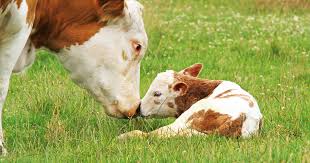
Here’s something you can easily do today to make the world a better place… skip meat today.
There is a trend called “Meatless Mondays,” but that implies you have to do “without something.” I’d like to turn that around and make it proactive…just skip eating meat today, and every Monday. No big deal to you. In fact there are many benefits.
Here are just a few of those benefits from the folks at “Meatless Monday:”
Why Meatless?
Because going meatless once a week may reduce your risk of chronic preventable conditions like cancer, cardiovascular disease, diabetes, and obesity. And going meatless once a week can also help reduce our carbon footprint and save precious resources like fossil fuels and fresh water.
For Your Health:
Reduce Heart Disease and Stroke—Vegetables, fruit, and whole grains have been shown to protect against cardiovascular disease. One study found that each daily serving of fruits or vegetables was associated with a 4% decline in coronary heart disease, and a 5% lower risk of stroke.[1] Another study found that a diet of 2.5 or more servings of whole grain per day was associated with a 21% lower risk of cardiovascular disease (heart disease, stroke, fatal cardiovascular disease).[2]
Limit Cancer Risk—There is convincing evidence that red meat and processed meat consumption increases the risk of colorectal cancer. There is also limited but suggestive evidence that red meat increases the risk of esophagus, lung, pancreas, and endometrium cancer and that processed meat consumption increases the risk of esophagus, lung, stomach, and prostate cancer. In contrast, a diet rich in fruit and vegetables decreases the risk of several types of cancers, including mouth, pharynx, larynx, esophagus, and stomach, evidence suggests.[3]
Fight Diabetes—Research suggests that plant-based diets, particularly those low in processed meat, can reduce your risk of type 2 diabetes.[4] Eating a plant-based diet can decrease total calorie consumption which helps you obtain and maintain a healthy weight, a key component to preventing and treating diabetes.[5]
Curb Obesity—Several large studies in Europe and the United States have demonstrated that people on plant-based, vegetarian diets tend to have a significantly lower body weight and body mass index (BMI). This may be in part because plant-based diets are rich in fiber (which is not found in animal products). Fiber contributes to fullness, resulting in lower calorie intake and less overeating.[6],[7],[8],[9]
Live Longer—Evidence suggests that eating a diet rich in fruits and vegetables, and a limited amount of red meat can increase longevity, whereas red and processed meat consumption is associated with increases in deaths due to cancer and cardiovascular disease.[10]
Improve The Nutritional Quality of Your Diet—Going meatless encourages consumption of plant-based sources of protein, like beans and peas. Consuming beans and peas results in a higher intake of fiber, protein, folate, zinc, iron, and magnesium. Also, diets high in beans and peas are associated with lower intakes of saturated fat and total fat.[11]
For Your Wallet:
Curb Healthcare Spending—Each year in the United States, chronic diseases like heart disease, stroke, cancer, and diabetes cause 7 in 10 deaths, and account for 75% of the $2 trillion spent on medical care.[12] In 2008, the estimated health care costs related to obesity were $147 billion.[13] By reducing our risk for these conditions, we can curtail healthcare spending nationwide.
Cut Weekly Budget—Many people save money by adding meatless meals to their weekly menus. Meatless meals are built around vegetables, beans and grains—instead of meat, which tends to be more expensive.[14] This is partly because producing meat requires extra expenses like feed and transportation. Though it can be challenging to serve healthy meals on a budget, going meatless once a week can help conserve money for more fruits and vegetables.
For the Environment:
Minimize Water Usage—The water needs of livestock are much greater than those of vegetables and grains.
– Approximately 1,850 gallons of water are needed to produce a single pound of beef.
– Approximately 39 gallons of water are needed to produce a pound of vegetables.[15]
Americans consume nearly four times the amount of animal protein than the global average.[16] When compared with current food intake in the US, a vegetarian diet could reduce water consumption by up to 58% per person.[17]
Reduce Greenhouse Gases —Studies show that meat production produces significantly more greenhouse gases than vegetables, including carbon dioxide, Methane and Nitrous Oxide – the three main contributing sources of greenhouse gas. Beef was found to produce a total of 30 kg of greenhouse gas (GHG) per kg of food, while carrots, potatoes and rice produce .42, .45 and 1.3 kg GHG per kg of food, respectively.[18]
Reduce Fuel Dependence—About 25 kilocalories of fossil fuel energy is used to produce 1 kilocalorie of all meat based protein, as compared with 2.2 kilocalories of fossil fuel input per 1 kilocalorie of grain based protein produced.[19] The meat industry uses so much energy to produce grain for livestock that if instead we used the grain to feed people following a vegetarian diet, it would be enough to feed about 840 million people.[20]
Cuba: Day Seven
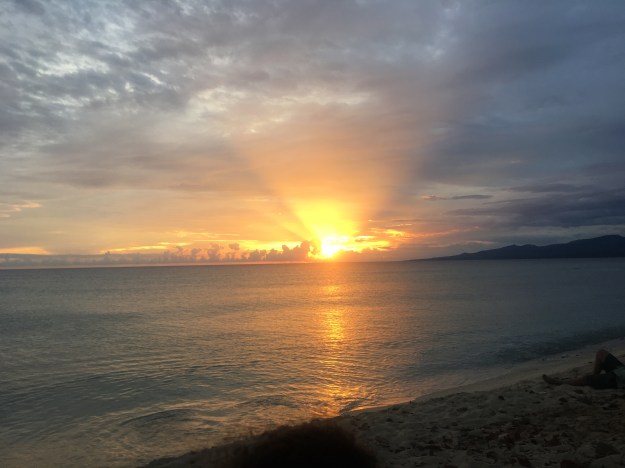
Cuba may be poor and lack so many resources, but it is a beautiful island.
We spend an hour in the morning walking through the national park ” El Cubano” in the mountains of Escambay, just a thirty minute drive outside Trinidad. The area is lush with a diversity of plants, birds and animals. We had a guide who first attempted to narrate us through the biodiversity of the area, but we were rebelling that morning and were focused on reaching the end of the trail where a waterfall awaited.
Of course it was hot. Of course it was humid. It’s a tropical island.
The walk was up and down easy hills and we were all drenched in sweat when we reached our destination. The waterfall cascaded into a clear pool of cold water. Most of our group stripped to our swim suits and jumped in.
Our pace one tour was slowing down. We only had another day together and by now, clusters of friends had formed: the under 40 New Yorkers; the two families bonded withe 50-something couple from New York; the 60-something couple from Oregon protecting the married mom traveling alone;the two single men from California each kept to themselves, but not awkwardly so. The group worked well together during our nearly two weeks together.
We asked question of our guide and office other about Cuban politics and life; American politics; each others jobs… not surprisingly a high percentage of the group worked in non-profits or higher education. We were balanced by our New Yorkers working in advertising, law and “investments.”
Dinner was at Playa Ancon.
Our bus stopped at what seemed to be someone’s house. It was our caterer and our musicians for our evening on the beach. The beach was almost vacant and what few people were there left soon after our arrival because a storm was blowing our way. We thought for sure were we about to be hit with a tropical storm, but, Dady, our lead guide said, “Let’s see…”
Everyone left the beach except us.
We were rewarded for our faith.
The few raindrops didn’t even dampen our clothes.
The sunset performed for us along with our musicians. Fresh fish, veggies and rum…an abundance of rum along with a few Cuban cigars.
Celebration in the joy of Cuba’s beauty.
Not the Usual Suburb

“Bobcat seen on Flintcove Lane, seeking babysitter.”
…hmmm, the posting on the neighborhood blog was a bit different today.
Headwinds
I didn’t expect a difficult ride.
The trees weren’t blowing, I didn’t think there was a breeze. It was a sunny, happy morning.
So I headed north on the trail. The pedaling was hard. I dropped a gear. Still a struggle.
I mumbled, complaining about it the entire ride. Until the turn.
Heading south, I felt no wind at my back, but the ride was easy.
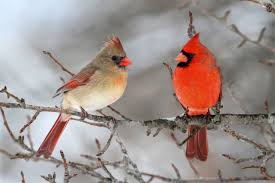
I saw the pair of cardinals, fluttering in their faithfulness.
The rabbits with their fuzzy faces full of grass, munching.
So many birds were singing.
Had I missed all this just moments before when I was riding north, complaining about unexpected struggles with my cycling?
Had I missed many other beautiful things in my life when I was in the middle of things not “going as planned?”
Probably.
Sky

I stood at the edge
of that high, high cliff
and saw the expanse of All.
I wanted to lean forward
and just fly – float- forever
so I could see everything that is offered.
Go into the Expanse that is not limited Self.
For a moment I imagined myself there.
Then I stepped back
to the grounding of the rocks and trees,
taking some of that Sky with me.
Rain
She arrived with a flash.
I waited.
Waited.
Thunder rolled overhead.
I waited.
Waited.
Salvation poured over me.
.
i CAN do SOMEthing
I recall a grade school game where we would emphasis various words in the same sentence by shouting the word to give a different emphasis to the message. “YOU are going to take out the trash.” “You are GOING to take out the trash.” “You are going to take out the TRASH.”
I was thinking about this play on words after listening to the news headlines about global warming and another report confirming that it’s not “on it’s way…it’s here.” That ‘s why the weather patterns are so extreme. (duh) Heat, floods, and even avalanches and earthquakes all seem to be Mother Earth trying to purge herself of..us?!
Always the optimist, I wondered if we couldn’t just all adopt the practice of believing, “I Can Do Something.”
Then I started playing with the emphasis of the words…
I can do something. Yes, me. I don’t have to wait on anyone else. I can walk not ride. I can not use, but instead reuse and recycle. I can do little things every day that add up to taking care of MYSELF by taking care of the air I breathe, the water I drink, the land I live on. I really have so much power over my life, but most people spend endless amounts of time and energy waiting on and blaming others for just about anything and everything. “I” really determine my life.
i CAN do something. CAN means it is possible. There is always something that CAN be done right now to improve the environment around you. CAN gives us hope. I hear the despair in friends, newscasters and world “leaders.” Have we really given up? CAN makes us think about options. It opens our minds to wondering what else CAN I do today that helps…drink from a mug at the coffee shop, not a paper cup.
i can DO something. For thirty years, NIKE has told us to “Just Do It.” I agree. Quit the paralysis analysis. A very trite phrase, but true, yes? DO something, anything productive right now. Act, stop thinking. DO, don’t wait on “proof.” Your gut tells you that using plastic bottles and plastic bags can’t be good. So don’t use them, starting now.
i can do SOMETHING. Just pick one thing, right now. Several easy solutions have been mentioned already in this essay: walk don’t ride; no plastic; canvas bags reused, no plastic or paper bags. Imagine if you only did these things every day starting today. Walking will improve your personal health and the environment. No plastic reduces the need for petroleum production (plastic is an oil based product) plus animals will be safer from choking of plastic trash, and earth will just be cleaner.
It’s not complicated. Don’t make this a big deal that overwhelms you. You don’t have to save the whole world at once. Just save your part of the world today. Believe …
“I Can Do Something.”
 BethenyReid