
Category Archives: joy
Moo Monday
Leave a reply
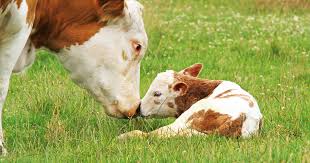
Here’s something you can easily do today to make the world a better place… skip meat today.
There is a trend called “Meatless Mondays,” but that implies you have to do “without something.” I’d like to turn that around and make it proactive…just skip eating meat today, and every Monday. No big deal to you. In fact there are many benefits.
Here are just a few of those benefits from the folks at “Meatless Monday:”
Why Meatless?
Because going meatless once a week may reduce your risk of chronic preventable conditions like cancer, cardiovascular disease, diabetes, and obesity. And going meatless once a week can also help reduce our carbon footprint and save precious resources like fossil fuels and fresh water.
For Your Health:
Reduce Heart Disease and Stroke—Vegetables, fruit, and whole grains have been shown to protect against cardiovascular disease. One study found that each daily serving of fruits or vegetables was associated with a 4% decline in coronary heart disease, and a 5% lower risk of stroke.[1] Another study found that a diet of 2.5 or more servings of whole grain per day was associated with a 21% lower risk of cardiovascular disease (heart disease, stroke, fatal cardiovascular disease).[2]
Limit Cancer Risk—There is convincing evidence that red meat and processed meat consumption increases the risk of colorectal cancer. There is also limited but suggestive evidence that red meat increases the risk of esophagus, lung, pancreas, and endometrium cancer and that processed meat consumption increases the risk of esophagus, lung, stomach, and prostate cancer. In contrast, a diet rich in fruit and vegetables decreases the risk of several types of cancers, including mouth, pharynx, larynx, esophagus, and stomach, evidence suggests.[3]
Fight Diabetes—Research suggests that plant-based diets, particularly those low in processed meat, can reduce your risk of type 2 diabetes.[4] Eating a plant-based diet can decrease total calorie consumption which helps you obtain and maintain a healthy weight, a key component to preventing and treating diabetes.[5]
Curb Obesity—Several large studies in Europe and the United States have demonstrated that people on plant-based, vegetarian diets tend to have a significantly lower body weight and body mass index (BMI). This may be in part because plant-based diets are rich in fiber (which is not found in animal products). Fiber contributes to fullness, resulting in lower calorie intake and less overeating.[6],[7],[8],[9]
Live Longer—Evidence suggests that eating a diet rich in fruits and vegetables, and a limited amount of red meat can increase longevity, whereas red and processed meat consumption is associated with increases in deaths due to cancer and cardiovascular disease.[10]
Improve The Nutritional Quality of Your Diet—Going meatless encourages consumption of plant-based sources of protein, like beans and peas. Consuming beans and peas results in a higher intake of fiber, protein, folate, zinc, iron, and magnesium. Also, diets high in beans and peas are associated with lower intakes of saturated fat and total fat.[11]
For Your Wallet:
Curb Healthcare Spending—Each year in the United States, chronic diseases like heart disease, stroke, cancer, and diabetes cause 7 in 10 deaths, and account for 75% of the $2 trillion spent on medical care.[12] In 2008, the estimated health care costs related to obesity were $147 billion.[13] By reducing our risk for these conditions, we can curtail healthcare spending nationwide.
Cut Weekly Budget—Many people save money by adding meatless meals to their weekly menus. Meatless meals are built around vegetables, beans and grains—instead of meat, which tends to be more expensive.[14] This is partly because producing meat requires extra expenses like feed and transportation. Though it can be challenging to serve healthy meals on a budget, going meatless once a week can help conserve money for more fruits and vegetables.
For the Environment:
Minimize Water Usage—The water needs of livestock are much greater than those of vegetables and grains.
– Approximately 1,850 gallons of water are needed to produce a single pound of beef.
– Approximately 39 gallons of water are needed to produce a pound of vegetables.[15]
Americans consume nearly four times the amount of animal protein than the global average.[16] When compared with current food intake in the US, a vegetarian diet could reduce water consumption by up to 58% per person.[17]
Reduce Greenhouse Gases —Studies show that meat production produces significantly more greenhouse gases than vegetables, including carbon dioxide, Methane and Nitrous Oxide – the three main contributing sources of greenhouse gas. Beef was found to produce a total of 30 kg of greenhouse gas (GHG) per kg of food, while carrots, potatoes and rice produce .42, .45 and 1.3 kg GHG per kg of food, respectively.[18]
Reduce Fuel Dependence—About 25 kilocalories of fossil fuel energy is used to produce 1 kilocalorie of all meat based protein, as compared with 2.2 kilocalories of fossil fuel input per 1 kilocalorie of grain based protein produced.[19] The meat industry uses so much energy to produce grain for livestock that if instead we used the grain to feed people following a vegetarian diet, it would be enough to feed about 840 million people.[20]
The Pursuit
“And I dream too much
and I don’t write enough
and I’m trying to find God everywhere”
-Anis Mojgani
Where is Sacred Space?

Your sacred space is where you can find yourself over and over again.
-Joseph Campbell
It’s Simple, Really

“But what is happiness except the simple harmony between a man and the life he leads?”
-Albert Camus
Do It

Go all the way with it.
Do not back off.
For once, go all the goddamn way with what matters.
-Ernest Hemingway
Someday

Conditions are never perfect. “Someday” is a disease that will take your dreams to the grave with you. If it’s important to you and you want to do it “eventually,” just do it and correct course along the way. -Timothy Ferriss
Cuba: Day Four


Cigars stink. But not in Cuba.
I don’t know much about cigars, but I’ve puffed one or two and have been around their foul odor.
Cuban cigars are different.
After spending a morning walking the tobacco fields, meeting the farmer, holding leaves that were curing in the thatched roofed storage house, then watching the farmer’s grown son roll each of us our own cigar…
… I can say these cigars smell and taste sweet and mild.
Most of our group sat in the small hut with Clara and her son puffing away and it was not offensive as cigar rooms elsewhere. No stale, foul odor.
Clara was puffing away on her own cigar when we arrived. I told her, “El nombre de mi abuela es Clara.”
She grinned, nodded and took me under her tutelage showing me how to hold the cigar and puff “just so.”
The family spends nine months harvesting their fields and receive the equivalent of 1,000 CUCs for their labor. “That’s the same cost as 1,000 beers,” says this morning’s guide.
We all stand still looking at our cigars and each other. Work for nine months for the price of 1,000 beers.
Most of us decided to buy as many cigars as allowable from Clara and her family.
The morning walk around the tobacco farm in the heat and humidity was tiring so we adjourned to our private casas after lunch for siestas during the afternoon rain.
Dinner was on top of another hill with a vista view of the mountains and sunset. Our tables and chairs sat on a platform balcony leaning over the cliff. The kitchen of this small, family-owned paladares was “out back” with the cats, chickens, turkeys, pigs and other farm animals.
The open fire grill was so hot that none of us could stand within five feet of it. Our chef just shrugged and prepared another delicious meal (of the same, in-season and only food available meal)
Our group was very compatible and our conversations covered politics, dating, parenting, travel…Dady, our lead guide was educated and well-informed and engaged in sharing her thoughts and perspectives about her country and the world.
Having these dinners talks while on a balcony suspended over the cliff, looking across the valley toward the sun setting behind the mountains made the evening paradise.
For the second night, I thought, “I really don’t want to leave this part of Cuba.”
Cuba: Day Three


Cuba
New York is not The City. England is not London. France is not Paris. Cuba is not Habana.
Leave the city and discover natural beauty, a slower pace and people willing to sit and talk.
Less than an hour’s drive west of Havana you are in the middle of a jungle of rolling hills and distant mountains.
There are few cars in and Habana and almost none on the highways. Cars are expensive and gas is cost prohibitive for most. People stand in the shade under overpasses holding out money or bananas or mangoes in exchange for a lift. Now and then you see a horse drawn cart.
We spent most of the day in the Sierra del Rosario Biosphere Reserve, a UNESCO site of 12,355 acres of preserved natural beauty. Designated in 1984, it is one of six UNESCO sites on the island.
Beginning in the 1800s, coffee plantations stripped much of Cuba of its natural beauty. By 1959, only 19% of Cuba was forested. After the revolucion, the government decided to reforest the land. More than 3000 people were engaged in planting 8 million trees.
The village of Las Terrazas was established by Castro’s government as a model of socialist community and sits in the middle of this reforested paradise. Omar, our guide for this part of our day, was born and has lived in this village is entire life. As a result he can see and hear birds, animals and insects that none of us could without his careful prompting.
The village was planned by an architect and as a result the buildings have uniform white stucco walls with red tile roofs. Paths wander from building to building, the village school, houses, apartments, playgrounds, the zip line course primarily for tourists and down to the lake.
Cuban artist, Lester Campo, has his studio on the shores of the Lake. Omar was so proud to discuss this internationally successful artist and how, “though he has traveled all over the world, he always comes home to Las Terrazas.”
The artist was out of the country, but his girlfriend was in the studio and happy to sell us lithographs of his work. His originals were too expensive for our group.
The community was very quiet and a few people were seen.
My husband asked Omar if there were other such communities throughout Cuba.
“No. It’s too expensive.”
Too bad.
Lunch was the same as all meals: tomato, cucumber, cabbage, beans, rice, and your choice of pollo, cane or pork. It was a lovely lunch, however, because we ate in the shade outside beside a creek with small waterfall slides. Most of us went swimming after our meal.
We drove to Vinales late in the afternoon. Vinales is one of the most picturesque parts of Cuba. It is among the limestone pin cushion hills called mogotes. It is small community filled with casa particulares, the equivalent of B & B’s.
I am so glad we were not there during tourist season because it is obvious this is an area that exists to serve tourists who want to see this exquisitely beautiful countryside.
We arrived at our casa just in time to sit on the veranda, sheltered from the hour-long torrential rain that marked the prelude to the hurricane season. Our hostess had fresh juice for us and we grabbed our light jackets to stay warm as temperatures quickly dropped, a welcome relief from the heat and humidity.
Dinner was the most magical dining experience I have ever had.
It was at the organic farm owned by Wilfredo Garcia Correa and his family. The farm house sat high on a hill over looking the Vinales Valley with craggy mountains seen off in the distance. Dinner was on the porch over looking the fields and valley with the sun setting off in the distance. It didn’t matter that it was the same food as all other meals.
Chickens, as always were everywhere and now we had the addition of farm kittens walking around our feet.
Not wanting the evening to end, our group declined our bus ride and, with Dady, our lead guide, we walked the two miles back to the center of the community and to our casas.
I want to stay here.
First Thought
First thoughts have tremendous energy. It is the way the mind first flashes on something-
Natalie Goldberg
 BethenyReid